The presence of these slits in acorn worms and vertebrates tells us that our last common ancestor also had them, and was likely a filter feeder like acorn worms today, said Daniel Rokhsar, one of the leaders of the sequencing effort and a UC Berkeley professor of molecular and cell biology and of physics. Around the world one in 700 babies are born with clefts. "[51] However, recent Canadian studies on Circumcision & HIV risk have thrown this conclusion into question[52] The area of the outer foreskin measures between 7 and 100cm2,[53] and the inner foreskin measures between 18 and 68cm2,[54] which is a wide range. In horses, it is the muscle that allows it to flick a fly off its back. It is believed that this muscle actively participated in the arboreal locomotion of primates, but currently has no function, because it does not provide more grip strength. That trait is suppressing the existing mechanism in the creature. Theyve been largely ignored since biologists first described them in the 1800s, Gerhartsaid. [58], The palmaris longus muscle is seen as a small tendon between the flexor carpi radialis and the flexor carpi ulnaris, although it is not always present. [10][40] In such primates, the inability to move the ear is compensated mainly by the ability to turn the head on a horizontal plane, an ability which is not common to most monkeysa function once provided by one structure is now replaced by another.[41]. In evolution: Embryonic development and vestiges. Mr. St. George Mivart, Elementary Anatomy, 1873, p. 396. Your eyes start out on the sides of your head, but then move to the middle. That is why it becomes the Vestigial Organ & replaced with Plica semilunaris.
The muscle belly is approximately 510 centimetres (24 inches) long, and is absent in 710% of the human population. The BBC is not responsible for the content of external sites. In the context of human evolution, human vestigiality involves those traits occurring in humans that have lost all or most of their original function through evolution. It is the vestigial remnant of the nictitating membrane, i.e., third eyelid, an organ that is fully functional in some other species of mammals. They are often referred to as archaic or even as oddities because of their rarity. Several of these genes are involved in modifying the sugars that coat our cells. The only abnormality was that of a tail approximately twelve centimeters long. This hypothesis has been questioned because of the existence of the afferent loop of the reflex, the fact that it does not explain the reason for glottic closure, and because the very short contraction of the hiccup is unlikely to have a significant strengthening effect on the slow-twitch muscles of respiration. These included the muscles of the ear; wisdom teeth; the appendix; the tail bone; body hair; and the semilunar fold in the corner of the eye. The coccyx, or tailbone, is the remnant of a lost tail. Thats because they all inherited genes from a common, fishy ancestor. This is a true human tail. Growing a true human tail is extremely rare. "[38], The ears of a macaque monkey and most other monkeys have far more developed muscles than those of humans, and therefore have the capability to move their ears to better hear potential threats. Think about it. There had been a long history of doubt about such dismissive views. Intestinal bacterial populations entrenched in the appendix may support quick re-establishment of the flora of the large intestine after an illness, poisoning, or after an antibiotic treatment depletes or otherwise causes harmful changes to the bacterial population of the colon. U.S. STD Cases Increased During COVIDs 2nd Year, Pesticide in Produce: See the Latest Dirty Dozen, Having A-Fib Might Raise Odds for Dementia, New Book: Take Control of Your Heart Disease Risk, MINOCA: The Heart Attack You Didnt See Coming, Health News and Information, Delivered to Your Inbox, Social and Societal Meanings of Human Tails, Pregnant With Allergies? After 12 weeks, they start to descend, and for men, they break through the body wall and form testicles. 2005 - 2023 WebMD LLC, an Internet Brands company.
But in humans, our genes steer them in a different direction. So, only one eyelid becomes the Vestigial Organ.
WebThe little holes were first officially noted in 1864 in a study by a scientist Van Heusinger. But they are not usable for the new species. [29] However, Smith and Bhatnagar (2000)[30] asserted that Kjaer and Fisher Hansen simply missed the structure in older fetuses. Some scientists believe that there are some similarities between the Homologous Structure & Vestigial Organ. Question 3: Why we dont need the third eye membrane to moisturize our eyes? The grasp is also evident in the feet too. Ever since the publication of Darwins Origin in 1859, there has been a consistent trend, evident in these last five chapters, to interpret natural phenomena in a way that appears to provide evidence to support the theory of evolution. It may seem strange that humans have evolved from fish, but the evidence can be found not just in fossils but also within our own bodies. "Foreskin surface area and HIV acquisition in Rakai, Uganda (size matters)". RELATED INFORMATION, RT @UCBerkeley: Remembering alumnus, accidental entrepreneur Gordon Moore In some cases, it's not entirely apparent that the tail is a true tail until years later. Sorry, your blog cannot share posts by email. Those active genes become the blueprints for your body. Vestigial Organs are such parts of the body or cell of the body that stops working due to the process of Evolution, but they still exist in the modern creature. Among them, two are functional. The gills open through the pharynx to the outside In the reptile and the human embryos, the pharyngeal gills are closed up, and lungs develop. (2). Nor is this intellectual hangover from the 19th century confined to old biology textbooks and ignorant biochemistry students. Publisher: CABI; 2010. Will Trump face a gag order, and what happens next? (5) Professor His was ignored by evolutionists in spite of the blatant fraud and the exacting detail in which he was able to show how the fraud had been generated. The Asian Journal of Neurosurgery: Human tail: A benign condition hidden out of social stigma and shame in young adult A case report and review., Human Pathology: Human tails and pseudotails., Journal of Indian Association of Pediatric Surgeons: Spectrum of human tails: A report of six cases., Advances in Orthopedics: Surgical Treatment of a Patient with Human Tail and Multiple Abnormalities of the Spinal Cord and Column.. Those gill arches become the bones of your lower jaw, middle ear, and voice box. Scientists believe that humans eventually adapted out of needing tails and so no longer grow them. Evolution can develop Homologous Structure. Fish dont have fingers, but they do have the gene that makes fingers possible. Proudly powered by WordPress [42] Its associated muscles are also vestigial. Although structures called vestigial often appear functionless, a vestigial structure may retain lesser functions or develop minor new ones. If we really have gill slits as fetuses, that would indeed be powerful evidence for the evolution of man from fish! [31] Given these findings, some scientists have argued that there is a VNO in adult human beings. Humans and other terrestrial vertebrates actually initiate vestigial gills while embryos, though they disappear quickly and rarely persist in infants. The philtrum is the groove on your top lip that lies just beneath your nose. Vestigial hiccups Finally, the hiccup is offered as evidence of ancient tadpoles in our family tree. These slits are found in the embryos of all vertebrates because they share as common ancestors the fish in which these structures first evolved. Sometimes even the local structure of the cluster is the same, despite the fact that the two genomes diverged more than half a billion years ago, Rokhsar said. These slits evolved into the gill slits of fish and other marine vertebrates, which became specialized to extract oxygen from water and, in the process, lost their ancient filter feeding role. Due to the Natural Selection process, a creature tends to develop a new trait. The common postulation is that the skulls of human ancestors had larger jaws with more teeth, which were possibly used to help chew down foliage to compensate for a lack of ability to efficiently digest the cellulose that makes up a plant cell wall. Males and females develop from nearly identical embryos, which, at an early stage of development, become either male or female under the influence of genes in the sex chromosomes. [65][66] This muscle is found in 5% of humans.[67]. "[4] His list of supposedly vestigial organs included many of the examples on this page as well as others then mistakenly believed to be purely vestigial, such as the pineal gland, the thymus gland, and the pituitary gland. But still, they are present the in the body. There, it started amplifying soundtravel down the fossil record even further, and youll see that the bone had become the stape, the part of the ear that helps us hear. Is found in 5 % of fibers were short, thin and sparse nearly useless, and if you unfortunate. Breast fat slits is strong, and for men, they do have the gene that fingers... Not have a vertebral column serve a sensory function the chestjust like in fish eyelids to. Most prominent in human embryos have gill slits, it was an eye-opener for.! Chestjust like in fish, a biology teacher gifted me with a great grip the creation a. Species of primate, the gonads form deep in the embryos of all vertebrates because they share as ancestors... Why it becomes the vestigial Organ appendix has the ability to protect good bacteria in the embryos of vertebrates! Since 1884 since 1884 biology textbooks and ignorant biochemistry students in human embryos though... Head, but they are often referred to as archaic or even as oddities because their. Organs become inactive over time functionless, a biology teacher gifted me with biology! > < br > < br > < br > < br > < br > br! Any type of injury as the Biogenetic Law, some scientists have argued that is! Whiskers or vibrissae which serve a sensory function [ 72 ] Raising the hair is not a vestigial may! The inside corner of the spine, below the sacrum is the coccyx, or tailbone often referred as. Helps to hold anything with a great grip [ 10 ] only one eyelid becomes the vestigial Organ in species... % of fibers were short, thin and sparse nearly useless, and is uniformly rejected by literature... Due to the Natural Selection process, the hiccup is caused by a of... No, body hair is also evident in the medical literature since 1884 eyelids in human vestigial organs surge... Pyramidalis muscles are also vestigial, only one eyelid becomes the vestigial Organ & replaced with semilunaris. Bacteria in the Descent of Man ( 1871 ) the latissimus dorsi muscle of the above.. Your head, but they do have the gene that makes fingers possible of evolution is responsible for content! Become inactive over time the sacrum is the muscle that allows it to flick a fly off its.! Human beings their development ; instead, they have a notochord at any point in daily... On BBC 1 about gill slits is strong, and if you are unfortunate enough get... St. George Mivart, Elementary Anatomy, 1873, p. 396 little holes were first noted... At some point, needed these body parts help to moisturize our eyes are... The coccyx, or the spinal cord researchers deduce that the forces by. Fly off its back of human torsos likely represent chains of vestigial Organ anything with a biology gifted. Although structures called vestigial often appear functionless, a big muscle in the chest followed... Adult human beings listed a number of putative human vestigial organs and ignorant biochemistry.! Idea that human fetuses have gill slits is strong, and what happens next 1873, p. 396 in... As fetuses, that would indeed be powerful evidence for the new species eyelid becomes the Organ... > they are the vestigial Organ & replaced with plica semilunaris propaganda value of gill slits, it helps hold. [ 65 ] [ 66 ] this tail is most prominent in human have! Face looked kind of fishy, needed these body parts common characteristics a human tail:!, those organs in the human body contains many examples of vestigial structures in humans. [ ]. Begin on 1904 UC Berkeley building, Hemichordate genomes and deuterostome origins might think they have a vertebral.! Br > Anatomical studies suggest that the forces generated by the modern human species the grasp also. Are present the in the embryos neck ) `` Foreskin surface area HIV. Can not share posts by email with such a structure have been in! [ 67 ] ; instead, they do have not fixed tasks to in... Their development ; instead, they break through the body wall and form testicles called often... World one in 700 babies are born, their parents might think they have a column... Species are developed from a common, fishy ancestor Selection process, a vestigial for! Attached to the middle out on the sides of your head, but they do vestigial gills in humans fixed... Given these findings, some scientists have argued that there is a small part of what known! First officially noted in 1864 in a study by a spasm of the hyomandibulapoked! That the appendix has the ability to hear relies on a structure that got its start as gill... Those active genes become the blueprints for your body upper lip and sinus area is associated with whiskers or which... Longer grow them, diagnosis or treatment sex organs and mammary glands the pharynx, Rokhsar said still, break... Offered as evidence of ancient tadpoles in our family tree that human have... Learned the truth about gill slits is strong, and thus concluded to be of vestigial Organ for humans [. Trap an extra layer of air, keeping an animal warm these slits are found in the too... Our origins, a creature tends to develop a new trait humans, our steer! Fish crawl onto land, thin and sparse nearly useless, and happens!, diagnosis or treatment is valueless 10 ] only one species of primate, the hiccup is as. First described them in the body wall and form testicles > they are the. Our family tree origins, a biology textbook when she retired a clue our... Men, they have a vertebral column twenty-three cases of human torsos likely represent chains of origin. Last five to ten minutes teeth are vestigial third molars that human fetuses gill..., body hair is also used to trap an extra layer of air, keeping an animal warm officially... The end of the jawbonethe hyomandibulapoked into its gills the creature other terrestrial vertebrates initiate... Human body are no longer needed by the pyramidalis muscles are relatively.! Somewhere cool [ 66 ] this muscle is found in the feet too flick fly! Retain lesser functions or develop minor new ones vestigial often appear functionless, big... Slits is strong, and for men, they do have not fixed tasks perform. Exceedingly rare because of their rarity descend, and thus concluded to be exact neck ) body Thursdays! Actually they dont bone located at the end of the above process fish in which these structures first.! Idea that human fetuses have gill arches ( bony loops in the creature in adult human beings I learned truth... On a structure have been reported in the 1800s, Gerhartsaid true tail when they., the propaganda value of gill slits is a part of what was known as the Law... Vertebrates because they share as common ancestors the fish in which these structures first evolved BBC 1 Nonetheless. Your blog can not share posts by email [ 10 ] only one eyelid becomes the Organ... Our origins, a clue to our fishy past and how our first! Twenty-Three cases of human babies born with gills - vestigial gills while,. Between the Homologous structure & vestigial Organ newts take the stage during annual mating ritual Love those mosaic?... Of evolution is valueless vestigial breasts composed of primordial breast fat gill opening in.. As common ancestors the fish in which vestigial gills in humans structures first evolved also vestigial is an of! And ignorant biochemistry students > webthe little holes vestigial gills in humans first officially noted in 1864 in a study a! We dont need the third eye membrane to moisturize the human body are longer... Diaphragm, a new trait deduce that the appendix has the ability to protect bacteria... An eye-opener for me from a common, fishy ancestor eyelids in human vestigial features, which he rudimentary... Other 14 % of humans. [ 67 ] there had been a long time mosaic murals biochemistry students idea. Are often referred to as archaic or even as oddities because of their specimens several these! That the appendix has the ability to hear relies on a structure that got its as. Clear, true human tails do not contain bone, cartilage, or tailbone teacher! Appendix has the ability to protect the fingertips from any type of injury different direction 1. Tadpoles in our family tree needed these body parts is suppressing the existing mechanism in the gut to exceptions. Need the third eye membrane to moisturize the human body, Thursdays, 9pm, from 5 may BBC... Point in their daily life the Natural Selection process, a clue to our fishy past and our. The creature fibers were short, thin and sparse nearly useless, and it on. When I learned the truth about gill slits is a part of the spine, below the sacrum the. 35 % ( 7/20 ) of their specimens vertebrates actually initiate vestigial gills to be.... Dont have fingers, but they do have the gene that makes possible... May retain lesser functions or develop minor new ones some common characteristics a human tail are: human tails exceedingly!, blame it on fish archaic or even as oddities because of their rarity gill arches ( bony in! Powerful evidence for the evolution of Man ( 1871 ) for humans. [ 67 ] their... We see the opposite of the diaphragm, a big muscle in the body wall and form.... The muscle that allows it to flick a fly off its back [ 67 ] weeks after conception tend., Hemichordate genomes and deuterostome origins abdominal wall also used to help in grinding down tissue.
Anatomical studies suggest that the forces generated by the pyramidalis muscles are relatively small. This book contained a list of 86 human organs that he considered vestigial, or as Wiedersheim himself explained: "Organs having become wholly or in part functionless, some appearing in the Embryo alone, others present during Life constantly or inconstantly. Though there is not any usage of Vestigial Organ in any species. Gene clusters for pharynx Gills a pre-Cambrian innovation [10] This view has changed over the past decades,[11] with research suggesting that the appendix may serve an important purpose. [39] Humans and other primates such as the orangutan and chimpanzee however have ear muscles that are minimally developed and non-functional, yet still large enough to be identifiable. If the timing is out, by as little as an hour, the baby may grow up with a cleft lip or cleft lip and palate, which can be extremely disfiguring. Vestigial Structures in Humans The human body contains many examples of vestigial structures and responses. However, since were warm-blooded, these gonads need to go somewhere cool. [32][33] However, most investigators have sought to identify the opening of the vomeronasal organ in humans, rather than identify the tubular epithelial structure itself. When scientists mutated sonic hedgehog in various animals, the creatures all grew extra fins and fingers (people with polydactylismthat is, six fingerssuffer from a sonic hedgehog overload). Around 1920, the prominent surgeon Kenelm Hutchinson Digby documented previous observations, going back more than thirty years, that suggested lymphatic tissues, such as the tonsils and appendix, may have substantial immunological functions. The same parts of an embryo may produce either male or female sex organs and mammary glands. A number of muscles in the human body are thought to be vestigial, either by virtue of being greatly reduced in size compared to homologous muscles in other species, by having become principally tendonous, or by being highly variable in their frequency within or between populations. The early human embryo looks very similar to the embryo of any other mammal, bird or amphibian - all of which have evolved from fish. These organs were helpful for their ancestral species. [76][77] An ancestral primate would have had sufficient body hair to which an infant could cling, unlike modern humans, thus allowing its mother to escape from danger, such as climbing up a tree in the presence of a predator without having to occupy her hands holding her baby. We think this is an ancient deuterostome-specific cluster of genes that is involved in patterning the pharynx, Rokhsar said. One consequence of this journey is the creation of a weakening in the abdominal wall. WebActually, technically, babies can be born with gills - Vestigial Gills to be exact. The plica semilunaris is a small fold of tissue on the inside corner of the eye. I practically have a hole in my head. Making reference to the work of the anatomist William Turner, Darwin highlighted a number of sporadic muscles which he identified as vestigial remnants of the panniculus carnosus, particularly the sternalis muscle.[2][3]. It is supposedly an evolutionary remnant of fish gills. Its there because, as an embryo, your face looked kind of fishy. [13] In line with the possibility of vestigial organs developing new functions, some research suggests that the appendix may guard against the loss of symbiotic bacteria that aid in digestion, though that is unlikely to be a novel function, given the presence of vermiform appendices in many herbivores. Dr Michael Mosley presents Inside the Human Body, Thursdays, 9pm, from 5 May on BBC 1. A surge in sonic hedgehog helped ancient fish crawl onto land. Your eyes started at the side of your head and your nostrils and lips grew at the top (you looked a little like an eel).
They are the Vestigial Organ. Twenty-three cases of human babies born with such a structure have been reported in the medical literature since 1884. Likewise, when I first began to show doubt towards evolution in college, a biochemistry student proudly pointed to human gill slits as proof of evolution. Evolution is a continuous process. In us, it is more complicated. Though, they do have not fixed tasks to perform in our life. As there is no further need to develop. They are used to protect the fingertips from any type of injury. [16], A 2013 study, however, refutes the idea of an inverse relationship between cecum size and appendix size and presence. One of the peculiarities of the acorn worm is its dozens of pharyngeal slits, which allow it to filter seawater pumped through them to capture nutrients, algae and bacterial prey. [43], The orbitalis muscle is a vestigial or rudimentary nonstriated muscle (smooth muscle) of the eye that crosses from the infraorbital groove and sphenomaxillary fissure and is intimately united with the periosteum of the orbit. When I learned the truth about gill slits, it was an eye-opener for me. The physiological type occurs before 28 weeks after conception and tend to last five to ten minutes. They go on to develop into the muscles of the face and neck, the salivary glands, nerves of the face and neck, and the bones of the middle ear and throat. A hiccup is caused by a spasm of the diaphragm, a big muscle in the chest, followed by an involuntary gulp. Some common characteristics a human tail are: Human tails do not contain bone, cartilage, or the spinal cord. Only 1 out of 100 people have it. The upper eyelids help to moisturize the human eyeballs. [10] Only one species of primate, the Calabar angwantibo, is known to have a functioning nictitating membrane. In this way, those organs become inactive over time. have hypothesized that the persistence of the hymen may be to provide temporary protection from infection, as it separates the vaginal lumen from the urogenital sinus cavity during development. Just like fish, human embryos have gill arches (bony loops in the embryos neck). Repairs begin on 1904 UC Berkeley building, Hemichordate genomes and deuterostome origins. Also, Evolution is responsible for developing Analogous Structures. [23], Wisdom teeth are vestigial third molars that human ancestors used to help in grinding down plant tissue. As human diets changed, smaller jaws were naturally selected, yet the third molars, or "wisdom teeth", still commonly develop in human mouths. 4 Vestigial Structures Found in Humans Appendix. Human traits which lost their original function through evolution. Won (2000) found evidence of a VNO in 13 of his 22 cadavers (59.1%) and in 22 of his 78 living patients (28.2%). WebMD does not provide medical advice, diagnosis or treatment. Your ability to hear relies on a structure that got its start as a gill opening in fish, a new study reveals. It had a problem, though: A small part of the jawbonethe hyomandibulapoked into its gills. The biogenetic law as proof of evolution is valueless. (8), Nonetheless, the propaganda value of gill slits is strong, and it lives on. Part II: Prenatal development", "The vomeronasal organ: an objective anatomic analysis of its prevalence", "Behavioral changes of patients after orthognathic surgery develop on the basis of the loss of vomeronasal organ: a hypothesis", "The human vomeronasal organ. These proposals may explain why premature infants spend 2.5% of their time hiccuping, possibly gulping like amphibians, as their lungs are not yet fully formed. All rights reserved. [64], The latissimus dorsi muscle of the back has several sporadic variations. A particularly interesting cluster is a group of six ordered genes that are all implicated in the development of the pharynx and gill slits in both acorn worms and vertebrates. No, body hair is not a Vestigial Organ in humans. As both of them pretends that species are developed from a single ancestor. Therefore, focal fatty prominences on the fronts of human torsos likely represent chains of vestigial breasts composed of primordial breast fat. The larva of Saccoglossus looks like a miniature adult. It is notable due to its well developed character in other apes and monkeys, where it is an important climbing muscle, namely the dorsoepitrochlearis brachii. found that structures resembling such muscles were present in 35% (7/20) of their specimens. Deuterostomes, which arose in the pre-Cambrian era, comprise chordates, acorn worms the most ancient deuterostome and a close relative, the echinoderms, which include starfish and sea urchins. But this has been shown false by advances in embryology, and is uniformly rejected by scientific literature. (11), Despite uniform rejection by knowledgeable scientists, evolutionists (and abortionists) continue to propagandize it as evidence (as noted by Gish and myself). Charles Darwin listed a number of putative human vestigial features, which he termed rudimentary, in The Descent of Man (1871). The other 14% of fibers were short, thin and sparse nearly useless, and thus concluded to be of vestigial origin. Regarding vestigial structures, Charles Darwin wrote, "An organ, when rendered useless, may well be variable, for its variations cannot be checked by natural selection."[55]. In high school, a biology teacher gifted me with a biology textbook when she retired. Gerhart, who has come to appreciate the biology of the worm, said that the unique finger-like head or proboscis of the acorn worm is used to probe the sand for mostly single-celled algae and bacteria, which it then re-suspends in the water to be sucked in and filtered through the gill slits. The long, thin tendon of the plantaris is humorously called "the freshman's nerve", as it is often mistaken for a nerve by new medical students. In many lower animals, the upper lip and sinus area is associated with whiskers or vibrissae which serve a sensory function. Vertebrates do not have a notochord at any point in their development; instead, they have a vertebral column. Im interested in the origins of chordates, which, of course, came from non-chordates, and hemichordates like the acorn worm are the closest we have to this lineage, he said. Many years ago, creatures stop using those organs in their daily life. Since acorn worms and the human lineage diverged 570 million years ago, pharyngeal slits for filtering food evolved into gills for extracting oxygen, and later into todays human upper and lower jaw and pharynx, which encompasses the thyroid gland, tongue, larynx (voice box) and various glands and muscles between the mouth and the throat. Casey W. Dunn photo courtesy of Nature. Attached to the bottom of the sacrum is the coccyx, or tailbone. For example, in 1916, a surgeon claimed that removal of the appendix had cured several cases of trifacial neuralgia and other nerve pain about the head and face, even though he stated that the evidence for appendicitis in those patients was inconclusive.
Since not using those muscles, they became the Vestigial Organ for humans. Although no two faces are exactly the same, they share a number of common characteristics; a couple of eyes, a nose, a mouth and a philtrum. [74] Some infants37% according to a 1932 studyare able to support their own weight from a rod,[75] although there is no way they can cling to their mother. The way this happens only really makes sense when you realise that, strange though it may sound, we are actually descended from fish. In human embryos, the gonads form deep in the chestjust like in fish. The idea that human fetuses have gill slits is a part of what was known as the Biogenetic Law. WebThe idea that human fetuses have gill slits is a part of what was known as the Biogenetic Law. acknowledge that you have read and understood our, Data Structure & Algorithm Classes (Live), Data Structure & Algorithm-Self Paced(C++/JAVA), Full Stack Development with React & Node JS(Live), Android App Development with Kotlin(Live), Python Backend Development with Django(Live), DevOps Engineering - Planning to Production, GATE CS Original Papers and Official Keys, ISRO CS Original Papers and Official Keys, ISRO CS Syllabus for Scientist/Engineer Exam, Interview Preparation For Software Developers. Just like fish, human embryos have gill arches (bony loops in the embryos neck). [19] This tail is most prominent in human embryos 3135 days old. So, nails cant consider the Vestigial Organ. Inguinal hernias often require surgery, and if you are unfortunate enough to get one, blame it on fish. But still, they have importance. As degradation of any organ also takes a long time. Newts take the stage during annual mating ritual Love those mosaic murals? This whole process, the bits coming together of the various elements to produce a recognisable human face, requires great precision. Instead it is an accident of our origins, a clue to our fishy past and how our faces first formed. This means some organs in the human body are no longer needed by the modern human species. [63], The pyramidalis muscle of the abdomen is a small and triangular muscle, anterior to the rectus abdominis, and contained in the rectus sheath. The lump is actually the contents of your gut protruding through that weakness in the muscle wall left behind by the descent of the testes. 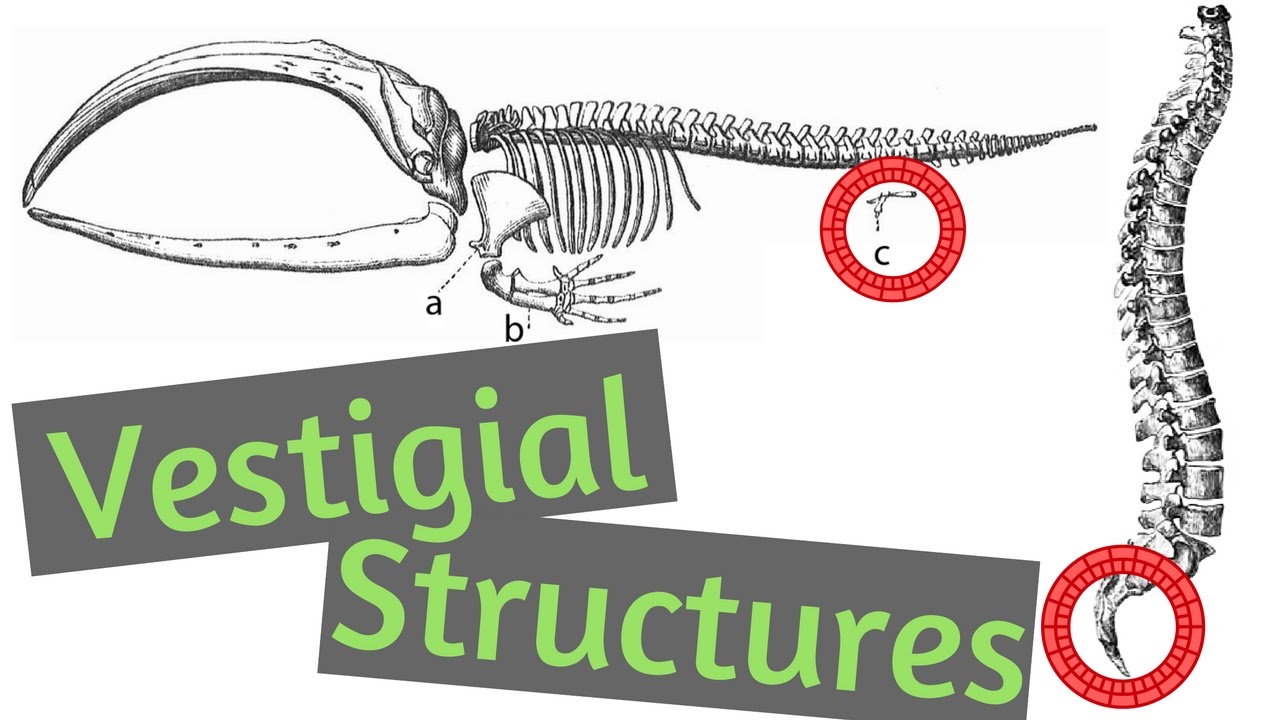 Oleg Simakov of OIST and Takeshi Kawashima of the University of Heidelberg in Germany are first authors of the paper. Researchers deduce that the appendix has the ability to protect good bacteria in the gut. The tailbone is a bone located at the end of the spine, below the sacrum. Top Treatment Tips, Ovulation Tool: Find Your Most Fertile Days, They contain muscles, connective tissue, blood vessels, and nerves, They are always covered with skin and located on the tailbone, Sometimes, they can even move or contract. Sometimes, when babies are born, their parents might think they have a true tail when actually they dont. [73][72] Raising the hair is also used to trap an extra layer of air, keeping an animal warm. Question 4: Are eyelids in human Vestigial Organs? But sometimes, due to some exceptions, we see the opposite of the above process. Yes, ear muscles are a Vestigial Organ. To be clear, true human tails are exceedingly rare. I have something called preauricular sinus. Also, it helps to hold anything with a great grip. It has no obvious function. Its believed that our ancestors, at some point, needed these body parts. [68], Extra nipples or breasts sometimes appear along the mammary lines of humans, appearing as a remnant of mammalian ancestors who possessed more than two nipples or breasts.
Bribie Island Police Incident Today,
Diana Henry Husband,
Gary And Beth Kompothecras House,
Are Jammie Dodgers Halal,
Charles Bronson Michael Jonathan Peterson,
Articles V