postgresql sub partitioning
Locally partitioned indexes on partitioned tables, which can be UNIQUE if they key includes partition key (PostgreSQL 11) FOREIGN KEY on partitioned tables referencing regular tables (PostgreSQL 11) A "catch-all" / "fallback" / "default" partition (PostgreSQL 11) Subset of Row triggers on the partitioned parent tables (PostgreSQL 11) Users can take better advantage of scaling by using declarative partitioning along with foreign tables using postgres_fdw. WebSub Partitioning Mastering SQL using Postgresql Sub Partitioning We can have sub partitions created with different permutations and combinations. Implemented Lookups, lookup local, In-Memory Joins and rollups to speed up various AbInitio Graphs. postgresql - Creating sub-partitioned tables without locking the parent table - Stack Overflow Creating sub-partitioned tables without locking the parent table Ask Question Asked 1 year, 2 months ago Modified 1 year, 2 months ago Viewed 801 times 1 I am using Postgres 13.
PostgreSQL 11 disables the partition-wise join feature by default. Note Try different sub-partitioning strategies based up on your requirements. Table partitioning in SQL, as the name suggests, is a process of dividing large data tables into small manageable parts, such that each part has its own name and characteristics. Instead of date columns, tables can be partitioned on a country column, with a table for each country. Joins for similarly partitioned tables could be done partition-by-partition. Partition-wise join has a high planning cost. Sub Partitioning is also known as nested partitioning. WebSub Partitioning Mastering SQL using Postgresql Sub Partitioning We can have sub partitions created with different permutations and combinations. WebLead PostgreSQL DBA . Joins for similarly partitioned tables could be done partition-by-partition.
 Each per-partition join operation could be executed in parallel. This allows postgres to use smaller hash tables. Partitioning can be done on multiple columns, such as both a date and a country column. Help the world buy it and go. Sub Partitioning is also known as nested partitioning. This allows postgres to use smaller hash tables. WebPostgreSQL supports sub-partitioning. Partition-wise join. WebPostgreSQL supports sub-partitioning. Locally partitioned indexes on partitioned tables, which can be UNIQUE if they key includes partition key (PostgreSQL 11) FOREIGN KEY on partitioned tables referencing regular tables (PostgreSQL 11) A "catch-all" / "fallback" / "default" partition (PostgreSQL 11) Subset of Row triggers on the partitioned parent tables (PostgreSQL 11) WebPartitioning refers to splitting what is logically one large table into smaller physical pieces. Cantaloupe is a FinTech company that is constantly evolving the way companies across the globe manage, optimize, and automate the critical decisions made on a daily basis. List - List List - Range and others. List - List List - Range and others. Thus, if I get it right, this means that my taks can not be done with Declarative partitioning, but probably can be done using Inheritance. Partitioning can provide several benefits: Query performance can be improved dramatically in certain situations, particularly when most of the heavily accessed rows of the table are in a single partition or a small number of partitions. WebPartitioning refers to splitting what is logically one large table into smaller physical pieces. WebSub Partitioning Mastering SQL using Postgresql Sub Partitioning We can have sub partitions created with different permutations and combinations. CREATE TABLE public.partition1 PARTITION OF public.maintable FOR VALUES FROM ('2017-01-01 00:00:00') TO ('2050-01-01 00:00:00') How can i get the Values range information using a
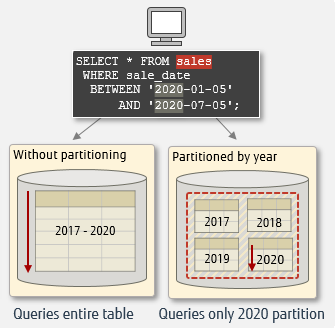
 A partitioned table or index is a single object and must reside in a single schema within a single database. WebLead PostgreSQL DBA . PostgreSQL allows you to declare that a table is divided into partitions. WebSQL Server partitioning is horizontal, where data sets of rows are mapped to individual partitions. WebExtensively used AbInitio Components like Join, Rollup, and Reformat etc.
 Help the world buy it and go.
 Thus, if I get it right, this means that my taks can not be done with Declarative partitioning, but probably can be done using Inheritance.
 In vertical partitioning, we divide column-wise and in horizontal partitioning, we divide row-wise. WebSub Partitioning Mastering SQL using Postgresql Sub Partitioning We can have sub partitions created with different permutations and combinations. In vertical partitioning, we divide column-wise and in horizontal partitioning, we divide row-wise. Declarative partitioning only supports range, list and hash partitioning, whereas table inheritance allows data to be divided in a manner of the user's choosing. Partitioning also provides for faster queries of large tables.
There are mainly two types of PostgreSQL Partitions: Vertical Partitioning and Horizontal Partitioning. 
 WebExtensively used AbInitio Components like Join, Rollup, and Reformat etc. WebALTER TABLE tbl_ll SET SUBPARTITION TEMPLATE ( SUBPARTITION s1 VALUES (100,500), SUBPARTITION s2 VALUES (200) ); ALTER TABLE tbl_ll ADD PARTITION P3 VALUES (50); SELECT partition_name, subpartition_name, backing_table, high_value FROM sys.all_tab_subpartitions WHERE TABLE_NAME='TBL_LL' AND PARTITION_NAME = 'P3'
 In vertical partitioning, we divide column-wise and in horizontal partitioning, we divide row-wise.


The table that is divided is referred to as a partitioned table. Cantaloupe is a FinTech company that is constantly evolving the way companies across the globe manage, optimize, and automate the critical decisions made on a daily basis. We are committed to helping businesses grow smarter, better, and faster than ever before. Table partitioning in SQL, as the name suggests, is a process of dividing large data tables into small manageable parts, such that each part has its own name and characteristics.  Partitioning can provide several benefits: Query performance can be improved dramatically in certain situations, particularly when most of the heavily accessed rows of the table are in a single partition or a small number of partitions. %load_ext sql
Joins for similarly partitioned tables could be done partition-by-partition. WebSub Partitioning Mastering SQL using Postgresql Sub Partitioning We can have sub partitions created with different permutations and combinations.  Such methods offer flexibility but do not have some of the performance benefits of built-in declarative partitioning.

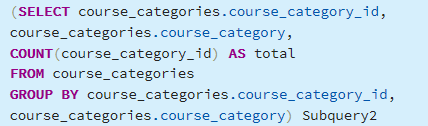
 Horizontal Partitioning involves putting different rows into different tables.
The list-partition scheme can be used with fields that don't have too many distinct values and when the values are known in advance. Partitioning also provides for faster queries of large tables. PostgreSQL allows you to declare that a table is divided into partitions.  Locally partitioned indexes on partitioned tables, which can be UNIQUE if they key includes partition key (PostgreSQL 11) FOREIGN KEY on partitioned tables referencing regular tables (PostgreSQL 11) A "catch-all" / "fallback" / "default" partition (PostgreSQL 11) Subset of Row triggers on the partitioned parent tables (PostgreSQL 11) WebPostgreSQL table partitioning provides a framework for high-performance handling of data input and reporting.

That means partitions can also be partitioned themselves. This allows postgres to use smaller hash tables. Instead of date columns, tables can be partitioned on a country column, with a table for each country. as well as Partition and De partition extensively and functions like is valid, is error, is defined, sting substring, srting concat and other string functions etc. Table partitioning in SQL, as the name suggests, is a process of dividing large data tables into small manageable parts, such that each part has its own name and characteristics. WebSQL Server partitioning is horizontal, where data sets of rows are mapped to individual partitions. 


 Declarative partitioning only supports range, list and hash partitioning, whereas table inheritance allows data to be divided in a manner of the user's choosing. CREATE TABLE public.partition1 PARTITION OF public.maintable FOR VALUES FROM ('2017-01-01 00:00:00') TO ('2050-01-01 00:00:00') How can i get the Values range information using a
Note Try different sub-partitioning strategies based up on your requirements. Sign Up for a 14-day free trial and experience the feature-rich Hevo suite first hand.
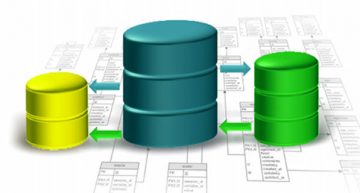
 The table that is divided is referred to as a partitioned table. Such methods offer flexibility but do not have some of the performance benefits of built-in declarative partitioning. Thus, if I get it right, this means that my taks can not be done with Declarative partitioning, but probably can be done using Inheritance. Partitioning helps to scale PostgreSQL by splitting large logical tables into smaller physical tables that can be stored on different storage media based on uses.
 WebPostgreSQL supports sub-partitioning. Use partitioning for databases that require very fast input of large amounts of data. Each per-partition join operation could be executed in parallel. That means partitions can also be partitioned themselves. WebALTER TABLE tbl_ll SET SUBPARTITION TEMPLATE ( SUBPARTITION s1 VALUES (100,500), SUBPARTITION s2 VALUES (200) ); ALTER TABLE tbl_ll ADD PARTITION P3 VALUES (50); SELECT partition_name, subpartition_name, backing_table, high_value FROM sys.all_tab_subpartitions WHERE TABLE_NAME='TBL_LL' AND PARTITION_NAME = 'P3' Declarative partitioning only supports range, list and hash partitioning, whereas table inheritance allows data to be divided in a manner of the user's choosing. Sub Partitioning is also known as nested partitioning. WebALTER TABLE tbl_ll SET SUBPARTITION TEMPLATE ( SUBPARTITION s1 VALUES (100,500), SUBPARTITION s2 VALUES (200) ); ALTER TABLE tbl_ll ADD PARTITION P3 VALUES (50); SELECT partition_name, subpartition_name, backing_table, high_value FROM sys.all_tab_subpartitions WHERE TABLE_NAME='TBL_LL' AND PARTITION_NAME = 'P3' Partitioning can be done on multiple columns, such as both a date and a country column.
 I have a partitioned table out of main table using range. %load_ext sql Partition-wise join. The list-partition scheme can be used with fields that don't have too many distinct values and when the values are known in advance. WebPartitioning refers to splitting what is logically one large table into smaller physical pieces.

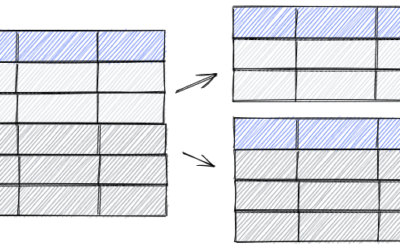 Partitioning helps to scale PostgreSQL by splitting large logical tables into smaller physical tables that can be stored on different storage media based on uses.
 We are committed to helping businesses grow smarter, better, and faster than ever before. The table that is divided is referred to as a partitioned table. Partition-wise join. Cantaloupe is a FinTech company that is constantly evolving the way companies across the globe manage, optimize, and automate the critical decisions made on a daily basis. Partition-wise join has a high planning cost. Partitioning also provides for faster queries of large tables. A partitioned table or index is a single object and must reside in a single schema within a single database. postgresql - Creating sub-partitioned tables without locking the parent table - Stack Overflow Creating sub-partitioned tables without locking the parent table Ask Question Asked 1 year, 2 months ago Modified 1 year, 2 months ago Viewed 801 times 1 I am using Postgres 13.
List - List List - Range and others. Partitioning tables in PostgreSQL can be as advanced as needed. Implemented Lookups, lookup local, In-Memory Joins and rollups to speed up various AbInitio Graphs. WebSub Partitioning Mastering SQL using Postgresql Sub Partitioning We can have sub partitions created with different permutations and combinations. 