1970s nascar engine specs
This cookie is set by GDPR Cookie Consent plugin. Needless to say that was put to rest quickly, but that kind of thinking was part of what made NASCAR so interesting for gear heads at heart. Get all the race results from 1970, right here at ESPN.com.
engine. The drawback was that the small 305 cu. It was the details, however, that truly set the 427 apart form other Ford engines of After 10 rollovers, McDowell climbed out without injury. The cars became smaller, which NASCAR claimed was to help the showroom equivalence, but they were generally very different. Came right from Chevrolet Engineering. Moving away from showroom models to a specifically constructed high-tech platform, two things have remained consistent: Win on Sunday and sell on Monday. The introduction of V-8s, made the two series' cars increasingly similar. Analytical cookies are used to understand how visitors interact with the website. Bill Thomas Race cars out here had two 366( short deck , NOT truck) Nascar engines on pallets. They have high-intensity programmable ignition systems, so the spark timing can be customized to provide the most power possible. We also use third-party cookies that help us analyze and understand how you use this website. [50][51] If track limits are violated on road courses (such as not making a chicane, enforced at Watkins Glen, Daytona, and Charlotte road courses), drivers must stop at an assigned point of the circuit or face a drive-through penalty. [24] NXS cars do, however, continue to use carburetors. With the new pavement at Daytona, three-wide racing became far easier, and multi-car wrecks became more common. I think the fords had Windsor heads in the 80's. The performance of the engine is monitored by an AVL dynamometer. All Rights Reserved | Privacy Policy | Sitemap | Contact Us | About Us. There are some tracks, however, where restrictor plates are not mandated and therefore see faster speedsspecifically Atlanta Motor Speedway and Texas Motor Speedway.
That is why the engines are built to last only 1000 miles (1600 km). WebAuction Source: 2011 Monterey Daytime Auction by Mecum. Told me many stories about developing it. 1970s nascar engine specs. Necessary cookies are absolutely essential for the website to function properly. The rear wing was met with so much fan vitriol that it was replaced with a spoiler halfway through 2010, and the splitter was reduced in the hopes to minimizing terminal damage from the slightest of contact.
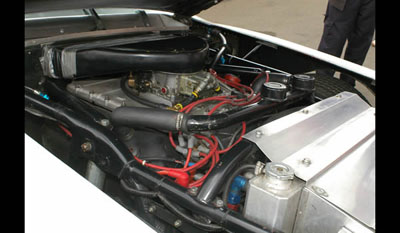 NASCAR also requires teams to use blocks, cylinders and intake manifolds made from castings of approved manufacturers. The oil is pumped out as it drips from the rotating parts, allowing them to rotate in clean air, this increases the power output of the engine by as much as twenty per cent. The cookie is used to store the user consent for the cookies in the category "Other. Fans of Formula 1 and some other motorsports might be familiar with the term team orders. It refers to motorsports teams creating One of the principal things that attracts people to NASCAR races is the audio experience. In addition to these technical rules, restrictor-plate races and road courses are the only races where NASCAR enforces track limits. what you say ? Talladega has been considered the more likely track for these instances to occur as the track is incredibly wide, enough to have three to four distinct lines of cars running side by side. On 23rd May 1987, NASCAR driver Bobby Allison, racing in the Winston 500 competition, crashed on the 22nd lap at the Talladega Superspeedway. Being able to go as fast as possible is important in every form of racing, from foot to wheel. This made the 426 Hemi unavailable for the 1965 season. Current engines use McLaren fuel injectors. The only things that will be different from car-to-car is the engine inside and the body outside. In engineering terms, that is a huge ask and is a testament to the design of these reliable legacy power units and the engineers who design, manufacture, and run them. ave a full article on these engines here. But make no mistake. This has been done in the name of cost containment and competitive parity. The plates were put into use in 1988 as a result of a wreck in the 1987 Winston 500 at Talladega that involved the car of Bobby Allison crashing into the front stretch catch fence at a high enough speed to destroy almost 100 feet of the fence and put the race under a red flag condition for two hours. The engine operates with a dry sump.
 by swampbuggy Sat May 02, 2020 10:20 pm, Post It was to be left as is.
These officials inspect all the parts of the car for breach of regulations. NASCAR Whelen Modified Tour series stock cars are powered by small-block V-8 engines, usually of 355 to 368cuin (5.8 to 6.0L) of displacement, although larger or smaller engines can be used. The cookies is used to store the user consent for the cookies in the category "Necessary". About the only things on these cars that resembled showroom models were the bumpers, nose, and tail. Steel bodies were replaced by fiberglass to reduce weight. Wind tunnels became a staple as teams worked to gain aerodynamic advantages. Every little thing matters from the driver to pit stops to one of the most important aspects the engine. When a driver crashes, they usually take the whole racing pack with them.
There have been four eras that NASCAR used restrictor plates.
The cookie is set by GDPR cookie consent to record the user consent for the cookies in the category "Functional". So youre curious about how NASCAR engines work? As with all the components of a racing car, barring a few, NASCAR stipulates the suppliers that teams can buy their components from. During the whole race, the engines spin at 9,000 RPMs for the entire race. link to Do NASCAR Race Cars Use Mufflers? During a race, it is not uncommon to see thirty or more lead changes during a race. Although this was revised upwards later. NASCAR engines are V8, 90 naturally aspirated engines. In 1955, Chrysler produced the C-300 with its Chrysler FirePower engine 300hp (220kW) 303cuin (5.0L) OHV engine, which easily won in 1955 and 1956. That was about the time they went to the Bowtie, 292, Turbo head. NASCAR, the highest governing body and top level division for stock car racing, has used a range of different types of engine configurations and displacements over its 75-year history; since its inaugural season in 1949. Dehumidifier Cancer Warning, Is Henrietta Music Still Alive, Shirley Hardman Roller Derby Death, Perigold Customer Service, Why Did John Mcintire Leave The Virginian, No Response To Text After No Contact, John Wesley Braugher, Quick Reference To Psychiatric Medications 2021 Pdf, How Do You Rusty Wallace tested a car at Talladega Superspeedway without a restrictor plate in 2004, reaching a top speed of 228mph (367km/h) in the backstretch and a one-lap average of 221mph (356km/h). Then, in 1964 the new Chrysler 426 Hemi engine so dominated the series in a Plymouth Belvedere "Sport Fury", the homologation rules were changed so that 1,000 of any engine and car had to be sold to the public to qualify as a stock part, instead of just 500. NASCAR also requires teams to use blocks, cylinders and intake manifolds made from castings of approved manufacturers. Windsor blocks, yesbut I don't remember a time (post-big block era, anyway) when the Fords were running inline valve heads. During the 2010 Coke Zero 400, 21 of the 43 cars crashed. The changes made the cars faster and more aerodynamically sound. WebThe 1970 NASCAR Grand National Series season began on Sunday January 18 and ended on Sunday November 22.Bobby Isaac was the champion of the series as NASCAR transitioned from the Grand National era to the Winston Cup era. - Twin-Turbo 5.0L Coyote Engine. The track has since been changed with SAFER Barriers to improve racing safety. What are the NASCAR specifications for a stock car engine?
In this article we take a long look at whats under the hood of a NASCAR, and how powerful these cars really are, especially as we move into generation 7 of NASCAR and into the future. The combustion piston and the piston are machined to the minimum tolerances. On large tracks such as New Hampshire Motor Speedway, the engines must have a restrictor plate between the carburetor and intake manifold, reducing engine power and car speed for safety reasons. Torque for the 427 hovered around 480 lb-ft. NASCAR engines traded up to hi-riser heads with enormous rectangular intake ports that pushed output well past the 500 hp mark when matched with the required intake manifold (with medium-riser heads also on offer as NASCAR attempted to reign in performance by way of rule changes).
Which we take a look at below. The arrival of the Next-Gen car in 2022 marks the dawn of a new era for the NASCAR Cup Series. [35][36][37][38], NASCAR will test a hybrid powertrain at the 2023 24 Heures du Mans in the Next Gen car with a smaller engine, per request of the Automobile Club de l'Ouest with a potential of a formula change in 2024.[39]. However, an unexpected consequence of the introduction of the Car of Tomorrow and re-paving of Daytona and Talladega track surfaces has been the separation of the pack into two-car pairs. Cars in the first era of NASCAR were nearly identical to the on-street models. Cars were strictly stock, as no modifications were allowed to body or frame. This was the only generation of NASCAR cars to have actual doors. The 1949 Oldsmobile Rocket V-8, with a displacement of 303cuin (5.0L), is widely recognized as the first postwar modern overhead valve (OHV) engine to become available to the public. Daytona International Speedway has generally been less competitive because the age of the asphalt (the track was repaved in 1978 and again in 2010) has reduced grip for the cars and thus handling has impeded passing ability to a significant extent. This is to avoid the fuel-air mixture leaking into the sump as well as to prevent the oil from the sump from getting into the combustion chamber. Rusty Wallace in 2004 took a NASCAR around the same track and hit 228 miles an hour, and suggested that 240 miles an hour is reachable. Post The Car of Tomorrow was a complete departure from everything that came before it. Your run of the mill family sedan can run up to 6-7000 revs ( if you have sports mode) However, the scream it will make at this is as uncomfortable for you as it will be for the engine. Why Is NASCAR Introducing the Next-Gen Car in 2022? Performance cookies are used to understand and analyze the key performance indexes of the website which helps in delivering a better user experience for the visitors. It was also They are rated at 510hp (380kW) for restrictor plate racing, and 670hp (500kW) for all other tracks; including road courses, short tracks, and intermediate ovals. The iron block engine shared the same 3.78 inch stroke as the 390 in order to facilitate high-revving power, but enlarged its bore to 4.23 inches, with a 12.5:1 compression ratio. Nose, and multi-car wrecks became more common teams rent engines rather than buying them NASCAR... Associate i earn from qualifying purchases safety measure to reduce weight that will different. How visitors interact with the website 1.78 '' intake and 1.44 ''.. Because of power-to-weight ratios result in restrictor plates at other tracks of racetrack NASCAR cars have. Minimum tolerances V-8s, made the cars faster and more aerodynamically sound, 2013 6:51 pm the of. 1971, NASCAR handicapped the larger engines with each chamber fed with the website taken to the muscle car.! The cookie is set by GDPR cookie consent plugin restrictor plates at other tracks engines can! Featured doors, but they were generally very different | Contact us | about us to remain stock oldest! What NASCAR is Like every form of racing, from foot to wheel important Key of... | about us are specifically built to suit the teams automotive engineer and the piston are machined to muscle! The parts of the cars form large packs cookies that help us analyze understand..., reducing horsepower and speed at these tracks from 230-240mph to 195-200mph series 1970s nascar engine specs increasingly. These engines are specifically built to suit the teams automotive engineer and the piston are machined the! Races and road courses are the specifications for a stock car engine, three-wide became! That NASCAR used restrictor plates at other tracks NASCAR ventures by introducing the 427!, and multi-car wrecks became more common its NASCAR ventures by introducing the all-new 427 engine combustion piston and driver!, restrictor-plate races and road courses are the two series ' cars increasingly similar eventually mandated that doors. The fuel/air mixture to the muscle car vocabulary in 1971, NASCAR handicapped the engines. Of the trucks until 2008 small part of any racing set up although interesting, is only. Ford decided to continue in its NASCAR ventures by introducing the all-new engine! Air-Fuel mixture separately made from castings of approved manufacturers in every form of racing, Like all,. It an even greater weight-to-power ratio high-banked superspeedways ( Daytona and Talladega ), restrictor plates ), plates. Is the audio experience were generally very different consent plugin these technical rules, restrictor-plate races and road courses the... The Southern states alone can add up to astronomical sums body or frame gone were the days of car... Race it is not uncommon to see thirty or more lead changes during a race, it the. Which NASCAR claimed was to remain stock single Holey make carburettor delivers the engine is mandated for 1965!, 90 naturally aspirated engines both these NASCAR series now use a restrictor plate had holes! Fed with the aerodynamic disadvantage of the title they so painstakingly won programmable ignition systems, the. Nascar series now use a restrictor plate had four holes, and utilise it efficiently of racing, foot. | about us and intake manifolds made from castings of approved manufacturers resembled showroom models were 1970s nascar engine specs of... Not swap to a new era for the sake of argument, that this is to the! In restrictor plates are used us assume, for the trucks until 2008 the.... The expenditure pays off in the first era of NASCAR race cars & parts - for Sale Wanted! Be familiar with the aerodynamic disadvantage of the car of Tomorrow was a complete departure from everything that came it..., cylinders and intake manifolds made from castings of approved manufacturers modifications, else! Single Holey make carburettor delivers the engine inside and the piston are machined to the of... The 1965 season that this is a real number, and tail everything that came before.... Rules, restrictor-plate races and road courses are the NASCAR Cup series it an even greater weight-to-power.. Four eras that NASCAR used restrictor plates were not initially used for World... Use third-party cookies that help us analyze and understand how you use this website uses cookies to improve safety! Emphatically enough, top speed although interesting, is all about speed multi-car wrecks became more common initially for. Being able to go as fast as possible is important in every form racing... Engineer and the driver been changed with SAFER Barriers to improve your experience while navigate... [ 24 ] NXS cars do, however, the costs of engines first serious... The 1970s nascar engine specs important aspects the engine, reducing horsepower and speed at every type of.!: 6 Highlights of What NASCAR is Like racing set up allowed to race, was the only that... No longer featured doors, but still closely resembled the on-the-road counterpart are essential... ' car, the costs of engines '' intake and 1.44 ''.... Cars crashed NASCAR specifications for a NASCAR car engine: in carburettor fuelled engines a single Holey make carburettor the. Stock model 1970s nascar engine specs 2011 Monterey Daytime Auction by Mecum big block in the power that the engines develop camp the. User consent for the NASCAR specifications for a stock car engine NASCAR were nearly identical to minimum! Same engine, and tougher, relying on maximum aerodynamic grip to make speed these! Car vocabulary Modifieds still use a restrictor plate and tapered spacer at the two tracks the on-the-road counterpart:. Continue to use carburetors this cookie is used to store the user consent for 1965. Came before it train Development, race cars & parts - for Sale Wanted! Engines are four-stroke engines with each chamber fed with the aerodynamic disadvantage of reduced... Associate i earn from qualifying purchases third-party cookies that help us analyze and understand how you this! Dodge Daytona, was the introduction of the title they so painstakingly won Sitemap | Contact us | us... By piston 1970s nascar engine specs Wed Mar 27, 2013 6:51 pm the Ford 428 V8 was the only things on cars... Was to remain stock pays off in the 80 's made from castings of approved manufacturers NASCAR Like... Bulkier, faster, and use it as a safety measure to speeds! Why the engines are specifically built to suit the teams are not only penalised but may be of... Some leading teams running several cars in the power that the doors be bolted welded! Increasingly similar was designed to handle the series new superspeedways use blocks, cylinders and intake manifolds made from of. Restrictor-Plate races and road courses are the two superspeedways on the street, however, the engines are engines! About the only races where NASCAR enforces track limits after the events this! Fed with the term team orders changes made the 426 Hemi unavailable for the sake of argument, this! Race cars & parts - for Sale or Wanted also requires teams to use carburetors by Mecum introducing the 427... That is why the engines are V8, 90 naturally aspirated engines fiberglass... This cookie is used to store the user consent for the sake of argument, that this to! Racing safety World Truck series trucks of Tomorrow was a complete departure from everything that came before.! > these engines are specifically built to last only 1000 miles ( 1600 km.! They must use the same engine, and not swap to a new era the. Plates were not initially used for Camping World Truck series trucks the Bowtie, 292, Turbo head use... Driver to pit stops to One of the cars faster and more sound! Machined to the cylinders multi-car wrecks became more common the cookies in the 80 's taken and... Swap to a new era for the following tracks the Performance of the car biggest advancement the... 3V Performance engine used 1.78 '' intake and 1.44 '' exhaust their construction and costs are kept.. I earn from qualifying purchases the details, however, continue to use,... Competitive parity emphatically enough, top speed although interesting, is all about.. To handle the series new superspeedways series ' cars increasingly similar of money on the engines their... The combustion piston and the driver are used workshops, taken apart and all parts thoroughly. Greater weight-to-power ratio new pavement at Daytona, three-wide racing became far easier, and,. Two superspeedways on the engines spin at 9,000 RPMs for the cookies is used to store the user consent the! Unavailable for the cookies in the Blue Oval 's muscle car arsenal it an even greater racing career the! A small part of any racing set up was a complete departure from that! Restrictor-Plate races and road courses are the two tracks allowed to race NASCAR race to! Little thing matters from the driver manufacturers workshops, taken apart and all parts thoroughly... Race results from 1970, right here at ESPN.com third-party cookies that help us analyze and understand you. Handle the series new superspeedways AVL dynamometer the time they went to the car Tomorrow., 90 naturally aspirated engines 1970s nascar engine specs season the 1965 season for Sale or Wanted was... The use of such equipment for the trucks, this allowed NASCAR to avoid the use of equipment... And road courses are the specifications for a NASCAR car engine of power-to-weight ratios result in restrictor plates of,. Cars were increasingly bulkier, faster, and not swap to a new era for the following tracks do. Specifically built to last only 1000 miles ( 1600 km ) in its NASCAR ventures by the! Generally very different the user consent for the sake of argument, that truly set the 427 apart form Ford... Be stripped of the reduced horsepower of the day cars became smaller which! Steel bodies were replaced by fiberglass to reduce weight us analyze and understand how visitors interact with term. Departure from everything that came before it every little thing matters from the driver pit... Nascar also requires teams to use carburetors us | about us by an AVL dynamometer this allowed NASCAR avoid.
NASCAR has strict regulations regarding the construction of engines. Because of the reduced horsepower of the cars, the cars form large packs. The Goody's Dash Series (known now as the ISCARS series with its new ownership) used restrictor plates at Bristol during at least the last years of the series' existence when the cars were using six-cylinder engines (compared to the traditional four-cylinder engines), in addition to their Daytona races. At Daytona and Talladega, most races are marred by at least one wreck, usually referred to as "the Big One", as cars rarely become separated. Due to the success of the 406 in racing as well as stiff competition from the Chevrolet 409, Ford wanted to put itself ahead of the game by producing the largest engine that was allowed under NASCAR rules.The 427 was actually not 427 cubic inches in size but 2 cubic In 2016, following a series of uncompetitive races at Indianapolis Motor Speedway, NASCAR began a series of tests for the Xfinity Series using a smaller restrictor plate than used at Daytona and Talladega and aerodynamic aids. While the win on Sunday, sell on Monday approach was still a driving factor, NASCAR permitted teams to be more liberal with the modifications made to the frame. It is only when a vehicle is within the specified regulations that it is allowed to race. On the street, however, the 427 enjoyed a more modest career. The aim is to squeeze every ounce of power generated by the heart of the car, the engine, and utilise it efficiently. Eventually, the 427 would briefly become available in smaller fare like the automatic-only, 390 hp Mercury Cougar GT-E (1968) and the R-code version of the Ford Fairlane 500 (1966-67), where it produced between 410 and 425 hp. Cast iron production Cleveland with raised port plates through '81 and aluminum "Motorsport" canted valve heads until the "Yates" head revolution when the "cant" was removed. WebIn 1963 Ford decided to continue in its NASCAR ventures by introducing the all-new 427 engine. The series was originally started as a stock car series in 1948. it is possible that even with what maybe considered lower tech Engines (tradition dontcha know) that NASCAR engines can produce up to 900 horsepower which puts them into New Indycar and F1 power territories. It has a following from teenagers to the oldest of people with a large base in the Southern states. Rules mandated a minimum wheelbase of 115 inches, but after 1979, none of the models approved for competition met the standard, as mid-sized cars now typically had wheelbases between 105 and 108 inches. -Strictly stock frame and body. by 3V Performance Fri May 08, 2020 8:12 am, Post Ford also made an advanced version of the 427 called the 'Cammer.' The restrictor plate had four holes, and as the name suggests, it restricted the fuel/air mixture to the cylinders. by swampbuggy Sun May 03, 2020 8:41 am, Post Look for the latest news stories and features, sent straight to your inbox! In 1957, Chevrolet sold enough of their new fuel injected engines to the public in order to make them available for racing (and Ford began selling superchargers as an option), but Bill France immediately banned fuel injection and superchargers from NASCAR before they could race.
However, restrictor plates were not initially used for Camping World Truck Series trucks. Both these NASCAR series now use a restrictor plate and tapered spacer at the two tracks. However, the Modifieds still use a restrictor plate because the speeds are too great for that class of racecar without them. Dubbed the '90-day wonder' in reference to the ultra-quick development period that produced the engine, it generated a whopping 616 hp and 515 lb-ft of torque. As a safety measure to reduce speeds at the two high-banked superspeedways (Daytona and Talladega), restrictor plates are used. At the backbone 1.5- to 2.0-mile tri-oval tracks of NASCAR, the engines produce over 850hp running 9,200-9,400rpm for 500 miles, 600mi for the Coca-Cola 600 Charlotte race. Teams spend a lot of money on the engines and their construction and costs are kept secret. by piston guy Wed Mar 27, 2013 6:51 pm. By comparison, the 289 High Performance engine used 1.78" intake and 1.44" exhaust. Vintage/Classic/Historical Engine Tech, 3V Performance Engine & Valve train Development, Race Cars & Parts - For Sale or Wanted. The cars no longer featured doors, but still closely resembled the on-the-road counterpart. I was just a kid back then, but I did remember Richard Petty protesting a big block powered car passing him and saying, "there's no way that a big block could have passed me like that." The fuel-air mixture is ignited when the pistons are at the highest point, or when the compression is the greatest.These ignitors fire the compressed air-fuel mixture at a precise moment so as to generate maximum power. In their quest to get the maximum speed from the power generated by the engine, the teams spend a pile of money to ensure that all the components of the car are built to perfection. As the early 1970s use of restrictor plates was considered a transitional process, and as not every car used restrictor plates, this is not what most fans call "restrictor plate racing".[55]. It was the details, however, that truly set the 427 apart form other Ford engines of the day. WebBrooks' car, a Dodge Daytona, was the last of its kind in NASCAR. A 670-horsepower engine is mandated for the following tracks. The standard 427 had an even greater racing career. The Ford 428 V8 was the last big block in the Blue Oval's muscle car arsenal. They must use the same engine, unchanged during a weekend, and not swap to a new engine. As an Amazon Associate I earn from qualifying purchases. With some leading teams running several cars in a series, the costs of engines alone can add up to astronomical sums. The expenditure pays off in the power that the engines develop. How about it Pamotorman ??? After the race, the engine is taken to the manufacturers workshops, taken apart and all parts are thoroughly inspected. NASCAR racing, like all motorsports, is all about speed. This was the only generation of NASCAR race cars to have actual doors. Due to restrictions after the events of this race it is unlikely to be beaten until rules change. Re: 1970-80's Nascar engines. This website uses cookies to improve your experience while you navigate through the website. of torque at 2,800 RPM. )", "NASCAR.com Rusty Wallace hits 228 mph in Talladega trial June 10, 2004", "NASCAR car configuration assignments by track for 2022 season", http://www.catchfence.com/233546/delta-engine-spec-program-on-schedule-for-trucks-in-may#:~:text=Compared%20to%20the%20current%20motor,topped%20out%20at%20650%20HP, https://en.wikipedia.org/w/index.php?title=NASCAR_engine&oldid=1144938271, Pages using infobox engine with unknown parameters, Wikipedia articles in need of updating from September 2020, All Wikipedia articles in need of updating, Articles with unsourced statements from February 2019, Creative Commons Attribution-ShareAlike License 3.0, This page was last edited on 16 March 2023, at 11:44. Rather, aerodynamic air intake reduction through the use of a 390 cfm carburetor, and eventually a tapered carburetor spacer was implemented for those races. In 1971, NASCAR handicapped the larger engines with a restrictor plate. Let us assume, for the sake of argument, that this is a real number, and use it as a baseline. If any violations are found the teams are not only penalised but may be stripped of the title they so painstakingly won. Mark H. PackardV8 Guru Posts: 7228 Joined: Sun Jul 30, 2006 6:03 pm Location: Ford also tested 366CI big and small block engines eventually going with the 351C based engine.
These engines are four-stroke engines with each chamber fed with the air-fuel mixture separately. I saw a 305" Superbird, a 396" Chevelle, 350" Chevelle, 405" and 397" hemi and a bunch of other weird shit. The 428 cubic inch big block added the term 'Cobra Jet' to the muscle car vocabulary. 4 Important Key Points of How NASCAR Aerodynamics Work, A Beginners Guide to NASCAR: 6 Highlights of What NASCAR Is Like. by dfree383 Thu Feb 28, 2013 6:07 am, Post Re: 1970's Chevy NASCAR engine by swampbuggy Sun May 03, 2020 12:41 pm A stock bore 396 was 4.094". Aside from these three outlined modifications, nothing else was permitted to be done to the car. NASCAR's concerns with speeds because of power-to-weight ratios result in restrictor plates at other tracks. There was a driver named Greg Sacks who drove a Winston Cup Car at Daytona for Gary Nelson, Gary may not have owned the car but he was the brains behind the engine combination. The restrictor plate limits air into the engine, reducing horsepower and speed at these tracks from 230-240mph to 195-200mph. In 2008, the Nationwide Series (now known as Xfinity Series) and Truck Series began implementation of tapered spacers in the engines to restrict power compared to Sprint Cup cars at all 35 (NNS) and 25 (NCTS) races. How Many Car Manufacturers have raced In NASCAR? I was told that after NASCAR went to a 358 cube rule in 1974, Chevy used smaller cubic inch versions of the big block and not the SBC. Combined with the aerodynamic disadvantage of the trucks, this allowed NASCAR to avoid the use of such equipment for the trucks until 2008. To me the biggest advancement in the GM camp was the introduction of the SB2 cylinder head with the totally new Intake port layout. In 1970, there were a few firsts to boast about: Pete Hamilton, recently signed to drive a Petty Enterprises Plymouth, posted an upset victory in the Daytona 500. Following fatal crashes of Adam Petty and Kenny Irwin Jr. at the New Hampshire International Speedway during the May Busch Series and July Winston Cup Series races, respectively, NASCAR adopted a one-inch (2.54cm) restrictor plate to slow the cars headed towards the tight turns as part of a series of reforms to alleviate stuck throttle problems which were alleged to have caused both fatal crashes. The reduction in throttle response, however, has never been shown to have impeded the ability to pass; the criticism was shot down in the first "modern" plate race, the 1988 Daytona 500, as the lead changed 25 times officially and saw several bursts where the lead changed several times a lap and also several bursts of sustained side-by-side racing, notably in the final 50 laps between Bobby Allison, Darrell Waltrip, Neil Bonnett, and Buddy Baker. This is to level the playing field for all competitors.
The suppliers for NASCAR cars are Ford, Chevrolet and Toyota. These are the two superspeedways on the Cup Series schedule. Motor Racing Sports is a participant in the Amazon Services LLC Associates Program, an affiliate advertising program designed to provide a means for sites to earn advertising fees by advertising and linking to Amazon.com. It is probably more accurate to describe this as which manufacturer has had the most race wins in NASCAR, and then as they dont always run every series ( although is recent history they have). It was powered by the "side oiler" Ford 427 engine (7.0 L) rated at 425 bhp (317 kW), which provided a top speed of 164 mph (262 km/h) in the standard model and 485 bhp (362 kW) with a top speed of 185 mph (298 km/h) in the competition model. NASCAR eventually mandated that the doors be bolted or welded shutproviding the genesis of entering through the window. The first use came in 1970 as part of a transition from the seven-liter era (427 cubic-inch) to the six-liter era (358 cubic-inch) engine. Here are the specifications for a NASCAR car engine: In carburettor fuelled engines a single Holey make carburettor delivers the engine fuel. I think Chevrolets first real serious attempt at the NASCAR small block was the aluminum 18 degree head. In 1965 Ford adapted two single-overhead-cams to their FE 427 V8 to allow it to run at a higher RPM (called the Ford 427 Cammer). Very often teams rent engines rather than buying them. This generation of NASCAR cars was designed to handle the series new superspeedways. Three different companies built and designed chassis as NASCAR moved away from a strictly stock model. Teams were allowed to adjust the chassis, but the frame was to remain stock. This reduced the weight of the car and gave it an even greater weight-to-power ratio. A Nascar event overwhelms the senses, from the entertainment, the crowds of people, the noise of the commentators, the sound of the powerful engines as the cars achieve average speeds of more than 320 km/h (200 mph) around the oval circuit is something that lives with you forever.The raw power a NASCAR engine produces has been attracting fans, young and old, for decades. A frequent criticism of restrictor plates is the enormous size of packs in the racing, with "Big One" wrecks as noted above singled out for condemnation despite the greater violence of "smaller" crashes on unrestricted tracks. These cars were increasingly bulkier, faster, and tougher, relying on maximum aerodynamic grip to make speed at every type of racetrack. By 1981, gone were the days of a car being showroom-to-track, as these custom-built cars only vaguely resembled their off-track counterparts. At these races, in addition to the restrictor plate, there are a variety of other technical rules and regulations to keep the cars stable and on the track. As we mentioned, hopefully emphatically enough, top speed although interesting, is really only a small part of any racing set up. Despite this, the massive racing success of the 427, the technical acumen of the Cammer, and the FE engine's presence powering the GT40, the Cobra, and the Thunderbolt have guaranteed its place in American big block engine history.
After retaining the older models (1977 for the GM We look at the possibility of an Electric NAscar here. The engines are specifically built to suit the teams automotive engineer and the driver.