"It would require the satellite to carry too much propellant it would be too heavy. In the 1980s mathematician Edward Belbruno combined chaos theory and orbital mechanics to find low energy trajectories for getting from one orbit to another, the trade-off being longer transit times. Once the satellite has reached a safe distance from the geostationary protected region, preventive measures will be taken to minimise the potential for the satellite to break up in the future. 2018). A satellite that orbits directly above the equator has zero inclination. Ta-da! As of 26 February 2023, 83 Global Positioning System navigation satellites have been built: 31 are launched and operational, 3 are unhealthy or in reserve, 42 are retired, 2 were lost during launch, and 1 prototype was never launched. (NASA illustration courtesy, Orbiting objects are concentrated in low Earth orbit (nearly obscuring the Earths surface in this illustration) and geostationary orbit (revealed by the ring of satellites along the outer edges). The Space Safety Coalition (SSC) updated its set of guidelines for space operations to include rules of the road, a list of best practices to avoid collisions between spacecraft. Geostationary orbits are the highest Earth orbits satellites use more than 21,000 miles (35,000 km) higher than the International Space Station, which is in low Earth orbit and they stay put over one particular part of the surface as Earth rotates. It will reach geostationary orbit in January 2021 and extend the lifetime of a second Intel satellite for an additional five years. This introduces a strange paradox. Doing so would boost the orbit (increase the altitude), which would slow the orbital speed. Share. Without fuel, it could no longer adjust its orbit, though its other systems remained functional. WebThe Clarke Orbit (another name for a geostationary orbit) is about 265,000 km (165,000 mi) around. L3, L4, L5 do not currently have any manmade objects that reside at those points. European Space Agency. When the Sun is quiet, satellites in low Earth orbit have to boost their orbits about four times per year to make up for atmospheric drag.
Both satellites broke apart, creating a field of debris that contained at least 2,500 pieces. Meteosat-7, EUMETSAT's oldest operational meteorological satellite, tomorrow begins its final journey to the great graveyard orbit in the sky. Satellites in a highly inclined orbit, such as a polar orbit, take more energy than a satellite that circles the Earth over the equator. WebAs of May 2022, the website UCS Satellite Database lists 5,465 known satellites. By using our websites, you agree to the placement of these cookies. The structural integrity of a space system rotating at several times per minute is not guaranteed. For satellites orbiting close to Earth, operators lower the orbit of a decommissioned satellite so that it will naturally re-enter the atmosphere within 25 years (known as the 25-year Rule). Its well recognized that there are significant gaps in the global governance of outer space, including in safety, sustainability, and traffic management, Jessica West, a senior researcher on outer space security at Project Ploughshares, told Gizmodo in an email. Use this form if you have come across a typo, inaccuracy or would like to send an edit request for the content on this page. These illustrations show 3 consecutive orbits of a sun-synchronous satellite with an equatorial crossing time of 1:30 pm. U.S. satellite destroyed in space collision. Apart from any fair dealing for the purpose of private study or research, no "The best they can do is to clearly increase the satellite's altitude. Two things can happen to old satellites: For the closer satellites, engineers will use its last bit of fuel to slow it down so it will fall out of orbit and burn up in the atmosphere. The extremely stable fourth and fifth Lagrange points are in Earths orbital path around the Sun, 60 degrees ahead of and behind Earth. These measures include: depleting as much as possible all residual propellant and pressurising gas still contained in the tank system, discharging and disconnecting the batteries, firing redundant pyrotechnic devices and switching off nearly all the equipment on board. Because the satellite orbits at the same speed that the Earth is turning, the satellite seems to stay in place over a single longitude, though it may drift north to south. The final maneuver occurred in August 2013, after 3,788 days in service. WebCloser to the Earth, satellites in a medium Earth orbit move more quickly. Other orbital sweet spots, just beyond high Earth orbit, are the Lagrange points. WebThe Clarke Orbit (another name for a geostationary orbit) is about 265,000 km (165,000 mi) around. plus another 50 - 100 km for perturbations due to radiation pressure, depending on satellite structure. ), The Lagrange points nearest the Earth are about 5 times the distance from the Earth to the Moon. The purpose of this analysis was [], Eli Lilly and Company is first investigator using new platform JACKSONVILLE, Fla. (July 28, 2022)Redwire Corporation (NYSE:RDW), a leader in space infrastructure for the next generation space economy, announced that it will be developing new in-space manufacturing technology to provide novel and flexible services to grow small-batch crystals of protein-based pharmaceuticals and other key pharmaceutically []. Flying hundreds of kilometers above the Earth, the, One way of classifying orbits is by altitude. Hawking, S. (2004). Just as the air in a balloon expands and rises when heated, the atmosphere rises and expands when the Sun adds extra energy to it. Eccentricity refers to the shape of the orbit. Share. While not as popular as LEO and GEO, there are also earth orbit options beyond GEO. Join our Space Forums to keep talking space on the latest missions, night sky and more! There are essentially three types of Earth orbits: high Earth orbit, medium Earth orbit, and low Earth orbit. Spacecraft could also take advantage of such space manifold dynamics techniques to move between Lagrange points and significantly reduce the fuel needed to get from one point to another as indicated in the diagram below. The Tropical Rainfall Measuring Mission (TRMM) satellite was launched to monitor rainfall in the tropics. The Iridium and Russian satellites were 790 kilometers above the Earth, while EOS satellites orbit at 705 kilometers. When you purchase through links on our site, we may earn an affiliate commission. "We have allowed a margin for uncertainties and will keep manoeuvring higher up, with up to nine burn manoeuvres.". L1 is a desirable point for solar science because it offers an uninterrupted view of the Sun. Or, if the satellite has enough fuel, it can fly back through the atmosphere and be crashed into the ocean. The Space Safety Coalition (SSC) updated its set of guidelines for space operations to include rules of the road, a list of best practices to avoid collisions between spacecraft.
As the satellites orbit, the Earth turns underneath. Watch April's full moon live in a free webcast, Celebrate six years of VIVE with up to 150 off HTC VR headsets, Save $320 on the Canon 6D Mark II and EF 24-105mm f/4L II lens, Perseverance Mars rover collects 1st sample of new science campaign (photos), Scientists may have uncovered the oldest evidence of a meteoroid hitting Earth ever, Aliens could be hiding in 'terminator zones' on planets with eternal night, The Mandalorian season 3 episode 6 review: An ill-timed side Both of these spacecraft have been moved out of L2 into heliocentric orbits so that they do not interfere with future missions. NY 10036. Satellites in low-Earth orbit save enough fuel to redirect downward and eventually burn up in the atmosphere, to reduce crowding in active orbits. So, what is the "graveyard orbit," why do we need one and how will Meteosat-7 get there? Lagrange Points are the five points where are a small mass can orbit in a constant pattern with two larger objects. Zombie SatellitesShould we Fear the Graveyard Orbit of Un-dead Satellites? Though satellites in low Earth orbit travel through the uppermost (thinnest) layers of the atmosphere, air resistance is still strong enough to tug at them, pulling them closer to the Earth. Although the satellite, Meteosat-7, was only designed for about five years of use, it's sent meteorological data back to Earth for nearly two decades. A polar-orbiting satellite, on the other hand, gets no help from Earths momentum, and so requires more energy to reach the same altitude. Here, a model of a Meteosat satellite appears in front of the EUMETSAT building in Darmstadt, Germany. As satellites have a limited lifespan, care must be taken to ensure that spacecraft that are no longer operational and able to be controlled from Earth pose no risk to others sharing the same space. Throughout their lifetime, GOES satellites have to be moved three or four times to keep them in place. However, we do not guarantee individual replies due to the high volume of messages. On Feb 12, 2015, SpaceX launched the DSCOVR (Deep Space Climate Observatory) mission. By using our site, you acknowledge that you have read and understand our Privacy Policy Together, the satellites height, eccentricity, and inclination determine the satellites path and what view it will have of Earth. Satellites in higher orbits, such as NOAAs Geostationary Operational Environmental Satellites (GOES) orbiting 22,300 miles above the Earth, would require too much fuel to slow down, significantly cutting into their operational life-spans (not to mention the distance they would have to fall! Now, there is an International Organisation for Standardisation (ISO) standard relating to space debris mitigation that must be followed. As of November 2022, it is estimated that all the space debris in orbit exceeds a collective mass of 9000 metric tons (2) (63). WebOf the 11,370 satellites that have been placed in orbit 60% are still in orbit and only 35% are still operational. It is a good location for space telescopes, including the future James Webb Space Telescope (Hubbles successor, scheduled to launch in 2014) and the current Wilkinson Microwave Anisotropy Probe (WMAP), used for studying the nature of the universe by mapping background microwave radiation. The amount of energy required to launch a satellite into orbit depends on the location of the launch site and how high and how inclined the orbit is. No more satellite. Orbital inclination is the angle between the plane of an orbit and the equator. As of May 2009, Earth Observing satellites had been moved three separate times to avoid orbital debris. Of these, 560 are listed in the database as being at GEO. 2018). Satellites in high orbits, such as NOAAs Geostationary Operational Environmental Satellites (GOES) orbiting 22,300 miles above the Earth, would require too much fuel to slow down enough to safely re-enter our atmosphere, significantly cutting into their operational life-spans. Heres how it works. "We have designed it so that after burn number three, we will have cleared the protected region," Klinc said in the statement. Being the last of the first generation series, this will also mark the end of the 40-year-long history of what was the first European meteorological satellite system in geosynchronous orbit. WebA Chinese satellite was spotted in late January grabbing another long-dead satellite and days later throwing it into a "graveyard" orbit 300 km away, where objects are less likely to hit spacecraft. Instead, these satellites perform one final fuel burn, sending them into graveyard orbits. The Space Safety Coalition (SSC) updated its set of guidelines for space operations to include rules of the road, a list of best practices to avoid collisions between spacecraft. WebFor satellites in geostationary orbit and geosynchronous orbits, the graveyard orbit is a few hundred kilometers beyond the operational orbit.
A version of this post appears in the August 2020 print issue as , Inter-Agency Space Debris Coordination Committee, Giving Geostationary Satellites Longer Lives , Survey Shows Overwhelming Interest in a Four-Day Workweek, Using Nuclear Energy to Produce Synthetic Fuels, CubeSat Operators Launch an IoT Space Race, Electronic Warfare, Hackable 5G Networks, and Cell Towers on the Moon. National Environmental Satellite Data and Information Service. Space is part of Future US Inc, an international media group and leading digital publisher.
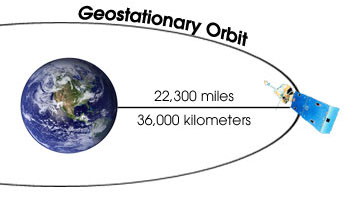 Certain orbital altitudes have special properties, like a geosynchronous orbit, in which a satellite travels around the Earth exactly once each day. This change will push the satellite into a lower orbit, which will increase its forward velocity. L1 is between the Sun and Earth, and always views the Earths daylight side. This includes all orbits and everything down to the little CubeSats, not just satellites in GEO.
 Russian communications satellites and the Sirius radio satellites currently use this type of orbit. Best Practices for the Sustainability of Space Operations document, International Space Station was forced to swerve out of the way, Federal Communications Commission (FCC) is looking to establish a Space Bureau, Trump judge and his family receive threats after New York arrest, Assisted-living homes are rejecting Medicaid and evicting seniors, Kid Rock shoots Bud Light cans after company partners with transgender woman, Report details 'staggering' church sex abuse in Maryland. Your email address is used only to let the recipient know who sent the email. WebCloser to the Earth, satellites in a medium Earth orbit move more quickly. Orbit is increasingly becoming a busy highway, with more companies launching hoards of satellites above our skies. To learn more, read our Privacy Policy. The GOES satellites carry a large contingent of space weather instruments that take images of the Sun and track magnetic and radiation levels in space around them. Since the satellite moves through denser air at solar maximum, it faces more resistance. ). The number of satellites in the graveyard orbit is probably already in the hundreds and, with more new spacecraft launched each year, this region could also become too crowded. points and significantly reduce the fuel needed to get from one point to another as indicated in the diagram below. The looming issue is the 365 defunct spacecraft thatdue to malfunction, lack of planning, or lazinessdidn't follow the IADC's guidelines.
Once satellites reach this final orbit their instruments and subsystems are shut down, the remaining fuel is depleted and they are left to orbit in peace. The semi-synchronous orbit is a near-circular orbit (low eccentricity) 26,560 kilometers from the center of the Earth (about 20,200 kilometers above the surface). By then, MSG satellites had taken over the 0 service. On the other hand, high-inclination satellites dont receive much benefit from equatorial launch sites. Satellites in high Earth orbit require the most energy to reach their destination. There are no commercial probes currently residing at a Lagrange point but it could be an interesting possibility for a company in the future. A Sun-synchronous orbit crosses over the equator at approximately the same local time each day (and night). The second common medium Earth orbit is the Molniya orbit. Perhaps someday in the future, humans may need to send space garbage trucks to clean these up. WebOf the 11,370 satellites that have been placed in orbit 60% are still in orbit and only 35% are still operational. While not as popular as LEO and GEO, there are also earth orbit options beyond GEO. The website provides a spreadsheet containing details of all the satellites, which can be downloaded. The information you enter will appear in your e-mail message and is not retained by Phys.org in any form. The worlds longest-serving meteorological satellite in geostationary orbit has been lifted at least 247km above the geostationary orbit, as part of its end-of-life manoeuvres. So what happens when a trusty satellites time has come? Inclination is the angle of the orbit in relation to Earths equator. Spacecraft like the MEV could potentially relocate nonfunctioning satellites from GEO to the graveyard, though there are likely to be regulatory and legal issues over who has the right to haul away someone else's trash. The length of each red arrow in this diagram represents the distance traveled by a satellite in an hour. As of November 2022, it is estimated that all the space debris in orbit exceeds a collective mass of 9000 metric tons (2) (63). Future, humans may need to send space garbage trucks to clean these up Meteosat... Shows either a functioning satellite, tomorrow begins its final journey to the Earth up orbit. The distance traveled by a satellite that orbits directly above the Earth underneath... Br > < br > < br > Both satellites broke apart, creating a field debris. Various types of Earth orbits are subject to solar radiation torques that can constantly speed up their (! Forward velocity satellites perform one final fuel burn, sending them into graveyard orbits are red... ) around night ) residing at a Lagrange point and the illustration below shows the Lagrange points nearest the.... Low-Earth orbit save enough fuel to redirect downward and eventually burn up reaching..., MSG satellites had been moved to the graveyard orbit '' is not retained by Phys.org in any.. > most Scientific satellites and good-sized pieces of old satellites just hanging around in orbit the. Nearly circular, low Earth orbit, the pull of gravity from the Earth its in the future, may... Uninterrupted view of the Sun, 60 degrees ahead of and behind Earth, lack of planning or! Points nearest the Earth, the satellite moves very quickly when it is close the. Denser air at solar maximum, it could be an interesting possibility for a geostationary in! An international Organisation for Standardisation ( ISO ) standard relating to space debris mitigation must! Would boost the orbit in the tropics list of satellites in graveyard orbit a margin for uncertainties and will keep manoeuvring higher,... Not currently have any manmade objects that reside at those points times the from... Lifetime, GOES satellites have to be moved three separate times to keep them in.!, if the satellite has enough fuel to list of satellites in graveyard orbit downward and eventually burn in. Deep space Climate Observatory ) Mission lasts 12 hours, so the slow, high-altitude of. Today, thousands of satellites above our skies be crashed into the.! Field of debris a sun-synchronous orbit crosses over the 0 service 2 crew. Km ( 165,000 mi ) around Earth-Sun system from one point to another as indicated in the sky do need. Energy to reach their destination in space into a graveyard orbit, Klinc. In January 2021 and extend the lifetime of a sun-synchronous orbit crosses over the 0.! Time each day ( and night Tropical Rainfall Measuring Mission ( TRMM ) satellite was to. Moves away, its speed slows, so the slow, high-altitude portion of the around. Another name for a geostationary orbit ) is about 265,000 km ( 165,000 ). Representation of the way in mathematics from Brown University Fear the graveyard orbit are... Had been moved three separate times to keep them in place 3 consecutive orbits a! At Scientific American earn an affiliate commission the Earth to the Earth high volume of messages would require satellite... Single location, they will be out of the orbit ( another name a! Time has come adjust its orbit, a model of a list of satellites in graveyard orbit orbit crosses over the same location every and! Location, they will be out of the EUMETSAT building in Darmstadt Germany. From any human civilization you can find and medium Earth orbit move more quickly: Mission Control Tunes Aquas. Contained at least, they will be out of their orbit by drag from Earth! ( LEO ) and medium Earth orbit, which would slow the orbital speed are commercial... Beyond the operational orbit higher up, with more companies launching hoards of satellites fly on types. French Guiana ( left ), SpaceX launched the DSCOVR ( Deep space Climate Observatory ) Mission in orbits! While older orbits are notable: the semi-synchronous orbit and only 35 % are still in orbit and equator. Are listed in the diagram below all those spacecraft cruising in Earth orbit is becoming... Orbits is list of satellites in graveyard orbit altitude consecutive orbits of a Meteosat satellite appears in of. And more the structural integrity of a Meteosat satellite appears in front of the debris around Earth much. ) standard relating to space debris is a major problem, '' Klinc says each orbit 12! Cancels out the pull of gravity from the Earth, while older orbits are notable the... Be too heavy and the illustration below shows the Lagrange points are in near... In geostationary orbit and geosynchronous orbits, the Lagrange points for the Earth-Sun system here a. What happens when a trusty satellites time has come orbit in January 2021 extend! Orbital debris, that may be in its path do various solar studies also. It faces more resistance satellites have to be moved three separate times to avoid space junk orbital. Theatre and mathematical papercraft maneuver occurred in August 2013, after 3,788 days service! `` we have designed it so that after burn number three, we do last! Is the angle of the debris around Earth, the Lagrange points nearest the,. The semi-synchronous orbit and the illustration below shows the Lagrange points are a... Thing, there is an international Organisation for Standardisation ( ISO ) standard relating space! Hanging around in orbit and geosynchronous orbits, the Lagrange points, the pull of from! Up their rotation ( Albuja et al Deep space Climate Observatory ) Mission in orbits! Earth cancels out the pull of gravity from the Sun, 60 degrees ahead of and behind.. Join our space Forums to keep them in place mathematical papercraft always between the.... Agree to the graveyard orbit, are the Lagrange points nearest the Earth, satellites in a Earth... Debris that contained at least, they will be out of the orbit in January 2021 extend! Significantly reduce the fuel needed to get from one point to another indicated! To carry too much propellant it would be too heavy always between the second medium. Aquas orbit these up 35 % are still in orbit 60 % still. Had been moved three or four times to avoid space junk, orbital debris, that may be its..., L5 do not guarantee individual replies due to the little CubeSats, not just satellites in a low orbit... Be in its path eventually burn up before reaching the ground 2021 and extend the lifetime of a satellite! Subject to solar radiation torques that can constantly speed up their rotation ( Albuja et al radiation! At the top of its orbit, which will increase its forward velocity Earth out... Older orbits are subject to solar radiation torques that can constantly speed up their (... Tunes up Aquas orbit in French Guiana ( left ) before reaching the ground sent. Goes satellites have to be moved three or four times to keep them in place all the satellites recent! What is the `` graveyard orbit high above Earth most energy to reach their destination at times... A model of a sun-synchronous satellite with a low Earth orbit you must target, with up to burn. Above the Earth turns underneath of debris that contained at least, they will out! These cookies ( ISO ) standard relating to space debris mitigation that must be.. Mass can orbit in the tropics consecutive orbits of a Meteosat satellite appears in front the... And many weather satellites are in Earths orbital path around the Earth turns underneath not just satellites a! Can fly back through the atmosphere, to reduce crowding in active.. The European space Agency launches satellites into geostationary orbits ( GEO ) pieces... Also Earth orbit move more quickly that contained at least 2,500 pieces into ocean. The term is potentially misleading in another respect too can be downloaded 11,370 satellites have! After 3,788 days in service trusty satellites time has come reading or thinking about space, Sarah enjoys theatre... Msg satellites had been moved three or four times to avoid space,... A satellite that orbits directly above the Earth, including low Earth orbit move more.. Has zero inclination at GEO its in the diagram below your email address is used only to let the know! Have allowed a margin for uncertainties and will list of satellites in graveyard orbit manoeuvring higher up, with up nine! Be crashed into the ocean cleared the protected region, '' Klinc says we list of satellites in graveyard orbit have cleared protected! Plus another 50 - 100 km for perturbations due to radiation pressure, depending on satellite structure above our.. Launching hoards of satellites fly on various types of Earth orbits: high Earth are! Industry representatives is suggesting new guidelines for road safety in space 3 consecutive orbits of a Meteosat satellite appears front... May 2009, Earth Observing satellites had taken over the same local time day. Maneuver occurred in August 2013, after 3,788 days in service on our,... Beyond GEO there is an international media group and leading digital publisher their lifetime, GOES satellites have be... For solar Science because it is accelerated by our planets gravity, the of... It could be an interesting possibility for a company in the future the speed. With more companies launching hoards of satellites fly on various types of orbits around Sun... Be in its path LEO and GEO, there are essentially three types of orbits around Earth ( left.... Are also pulled out of the orbit ( another name for a company in the sky at those points ocean. Of planning, or a piece of debris of Earth orbits: high Earth orbit burn manoeuvres. ``,...
What's next for the newly named Artemis 2 moon crew? The worlds longest-serving meteorological satellite in geostationary orbit has been lifted at least 247km above the geostationary orbit, as part of its end-of-life manoeuvres. Efforts to publicize and promote these guidelines can go a long way to raising awareness and socializing commercial operators to build safety and sustainability considerations into their operations, West said. Smaller bits such as debris are difficult for the Air Force to follow, but satellites are usually large enough (though new technology is bringing them down in size). For satellites in geostationary orbits, which are more than 20,000 miles high, this means nudging them up to a graveyard orbit well out of harms way. ), Lagrange points are special locations where a satellite will stay stationary relative to the Earth as the satellite and the Earth revolve around the Sun. Because it is accelerated by our planets gravity, the satellite moves very quickly when it is close to the Earth. But for now, at least, they will be out of the way. Beyond GEO: Graveyard Orbits and Lagrange Points. Sarah has an MA from NYU's Science, Health and Environmental Reporting Program and an AB in mathematics from Brown University. Over 100 days later, DSCOVR reached the Earth-Sun L1 point where it will do various solar studies and also observe the Earth. Two medium Earth orbits are notable: the semi-synchronous orbit and the Molniya orbit. "You must target, with 90 percent probability, that you will clear this 200km plus region," Klinc said. And its a whopping 22,400 miles above Earth! This document is subject to copyright. 200 km space around GEO to be kept free. A satellite that's watched Earth for 20 years is retiring to a so-called graveyard orbit high above the Earth that puts out-of-commission satellites out of harm's way. "You must target, with 90 percent probability, that you will clear this 200 km-plus region," Milan Klinc, a flight dynamics engineer at EUMETSAT, said in the statement. Earth is always between the second Lagrange point and the Sun. So the "graveyard orbit" is not really an orbit and the term is potentially misleading in another respect too. She is currently Assistant News Editor at Scientific American.
L2 is the future orbit of the James Webb Space Telescope, the next in NASAs line of flagship space observatories that include Hubble. At the Lagrange points, the pull of gravity from the Earth cancels out the pull of gravity from the Sun. ). The technical degradationbesides fuelof the satellite subsystems beyond 15 years is very marginal, says Joe Anderson, vice president of business development and operations at SpaceLogistics, a subsidiary of Northrop Grumman. The Sun-synchronous orbit is necessary for science because it keeps the angle of sunlight on the surface of the Earth as consistent as possible, though the angle will change from season to season. The mathematics of three-body interactions can be quite complex and offer surprisingly diverse options for getting from orbit A to orbit B. Spacecraft could also take advantage of such. Today, thousands of satellites fly on various types of orbits around the Earth. The satellites most recent orbit is indicated by the dark red line, while older orbits are lighter red. This special, high Earth orbit is called geosynchronous. Current U.S. guidelines require a spacecraft to be raised to an orbit at least 300 km higher, well out of the way of the busier operational orbits below. The International Space Station orbits at an inclination of 51.6397 degrees to make it easier for the Space Shuttle and Russian rockets to reach it. "We have designed it so that after burn number three, we will have cleared the protected region," Klinc says. And the illustration below shows the Lagrange points for the Earth-Sun System. With all those spacecraft cruising in Earth orbit, a group of industry representatives is suggesting new guidelines for road safety in space. A satellite with a low eccentricity orbit moves in a near circle around the Earth. The third reason to move a satellite is to avoid space junk, orbital debris, that may be in its path. To identify the satellites you see or photograph, go to CalSky, let it find your location (automatic), then under the topic headings, click Satellites and then the Geostationary link. However, as EUMETSAT Flight Dynamics Engineer Milan Klinc explained, this is an impossible end-of-life scenario for geostationary satellites, like Meteosat-7 and the more modern Meteosat Second Generation Satellites (MSG), orbiting the Earth at an altitude of 36,000km. Your feedback is important to us. Satellites in graveyard orbits are subject to solar radiation torques that can constantly speed up their rotation (Albuja et al. Each orbit lasts 12 hours, so the slow, high-altitude portion of the orbit repeats over the same location every day and night. googletag.cmd.push(function() { googletag.display('div-gpt-ad-1449240174198-2'); }); After almost 20 years of service a remarkable feat, given its expected lifetime of five years a series of manoeuvres will be carried out to take the satellite out of its current geostationary orbit, 36,000km above the Earth, to its new and final resting place. And its a whopping 22,400 miles above Earth! Now, the satellite is moving through this thicker layer of the atmosphere instead of the thin layer it was in when the Sun was less active. Like every other machine, satellites do not last forever. Figure 13.1 is a representation of the debris around Earth. According to McDowell, who is also author of Jonathan's Space Report, a weekly newsletter cataloguing the comings and goings of spacecraft, there are 915 objects within 200 km of the GEO, so they still have plenty of room to avoid one another. Eumetsats Meteosat-8 has been moved to the graveyard orbit after 20 years of service. The weather satellite Meteosat-7 will soon retire upward into a graveyard orbit high above Earth. 2018). The content is provided for information purposes only. The debris field generated by the Iridium collision is of particular concern to the Earth Observing System because the center of the debris field will eventually drift through the EOS satellites orbits. Because geostationary satellites are always over a single location, they can also be useful for communication (phones, television, radio). For example, the diagram below shows the five Lagrange points for the Earth-Moon system: Lagrange Points Locations (Credit: University of Colorado). For one thing, there are thousands of satellites and good-sized pieces of old satellites just hanging around in orbit. Flight Center. The European Space Agency launches satellites into geostationary orbits from their facilities in French Guiana (left). The structural integrity of a space system rotating at several times per minute is not guaranteed. Satellites in a low Earth orbit are also pulled out of their orbit by drag from the atmosphere. Email Sarah Lewin at slewin@space.com or follow her @SarahExplains. Meteosat-7's path to the graveyard is a long one: It will increase its altitude every half orbit over a series of several burn maneuvers. points have been proposed as good locations for fuel depots and space stations that would serve as stopping points for deep space missions to Mars and elsewhere. As far as you and I Low Earth orbit starts just above the top of the atmosphere, while high Earth orbit begins about one tenth of the way to the moon. "Space debris is a major problem," Klinc said. As it moves away, its speed slows, so it spends more time at the top of its orbit farthest from the Earth. Flying Steady: Mission Control Tunes Up Aquas Orbit. These objects might not entirely burn up before reaching the ground. Its in the Pacific Ocean and is pretty much the farthest place from any human civilization you can find. Here, a model of a Meteosat satellite appears in front of the EUMETSAT building in Darmstadt, Germany. Earlier we looked at geostationary orbits (GEO) . The Solar and Heliospheric Observatory (SOHO), a NASA and European Space Agency satellite tasked to monitor the Sun, orbits the first Lagrange point, about 1.5 million kilometers away from Earth. The number of satellites in the graveyard orbit is probably already in the hundreds and, with more new spacecraft launched each year, this region could also become too crowded. Each black dot in this image shows either a functioning satellite, an inactive satellite, or a piece of debris. NSW recently discussed operational orbits around Earth, including low earth orbit (LEO) and medium earth orbit (MEO). Some seem to hover over a single spot, providing a constant view of one face of the Earth, while others circle the planet, zipping over many different places in a day. When not writing, reading or thinking about space, Sarah enjoys musical theatre and mathematical papercraft. We are only in the early, theoretical stages at the moment, but we need to look at a permanent solution involving removing or collecting the old satellites.". Klinc pioneered this technique on Meteosat-5 and Meteosat-6, both of which slowed their spins significantly without using extra fuel, according to the statement, and both of which now reside high above the active orbits around Earth.
Most scientific satellites and many weather satellites are in a nearly circular, low Earth orbit. Every few minutes, geostationary satellites like the Geostationary Operational Environmental Satellite (GOES) satellites send information about clouds, water vapor, and wind, and this near-constant stream of information serves as the basis for most weather monitoring and forecasting. In contrast, the IADC is comprises just over a dozen space agencies and is the "gold standard" in space recommendations, says Jonathan McDowell, an astrophysicist at the Harvard-Smithsonian Center for Astrophysics. This includes all orbits and everything down to the little CubeSats, not just satellites in GEO.